

Missing expenses, poor bookkeeping, and incomplete financial records can affect more than your tax return. They can cost your business money and make financial decisions harder.
Even when an expense is legitimate, poor recordkeeping can make it difficult to claim the deduction or defend it during an IRS examination. They can also distort profitability, create cash flow uncertainty, and make it harder to spot tax-planning opportunities.
The problem isn’t always missing receipts. Sometimes, the expense was never recorded, was assigned to the wrong account, or wasn’t reviewed before the tax return was prepared.
How Can Poor Recordkeeping Lead to Lost Tax Deductions?
The IRS generally requires businesses to maintain records that support the income, expenses, and deductions reported on their tax returns.
Under IRS guidance on the burden of proof, taxpayers must substantiate the deductions they claim.
Poor recordkeeping can create problems in several ways, such as:
- Unrecorded expenses. Legitimate business purchases may never appear in the accounting records used to prepare the tax return.
- Misclassified transactions. Equipment purchases, operating expenses, and owner transactions may receive incorrect accounting treatment.
- Missing supporting documentation. A business may struggle to establish the amount or purpose of an expense.
- Incomplete reconciliations. Transactions may be duplicated, omitted, or recorded in the wrong period.
- Overlooked tax planning opportunities. Inaccurate financial information may prevent owners and advisors from identifying deductions, credits, or timing decisions before year-end.
For example, consider a construction company that purchases $75,000 in equipment during the year.
If the company records the purchase incorrectly or never communicates it to the tax advisor, it could miss an opportunity to evaluate depreciation deductions. Whether the equipment qualifies for a particular deduction depends on applicable tax rules, business use, and when it was placed in service.
The expense isn’t necessarily lost forever, but correcting the problem later can create additional work, expense, and uncertainty.
Which Bookkeeping Mistakes Can Cost Your Business Money?
Some accounting mistakes have consequences that aren’t immediately apparent.
You might review a profitable income statement without realizing that several months of credit card transactions haven’t been reconciled. Or you might believe project margins are improving when equipment or subcontractor expenses haven’t been allocated correctly.
Common warning signs include:
- Financial statements that don’t agree with bank or credit card balances.
- Significant expenses recorded in miscellaneous accounts.
- Equipment purchases treated inconsistently.
- Unexplained differences between job cost reports and the general ledger.
- Owner distributions or personal expenses mixed with business transactions.
- Financial reports that aren’t reviewed until tax season.
These issues can affect tax reporting, but they also raise an important management question: If your financial records aren’t accurate enough to support your deductions, are they accurate enough to support your business decisions?
What Is the Financial Impact of Inaccurate Bookkeeping?
Lost deductions are only one potential cost. Poor bookkeeping can affect several areas of business performance, including:
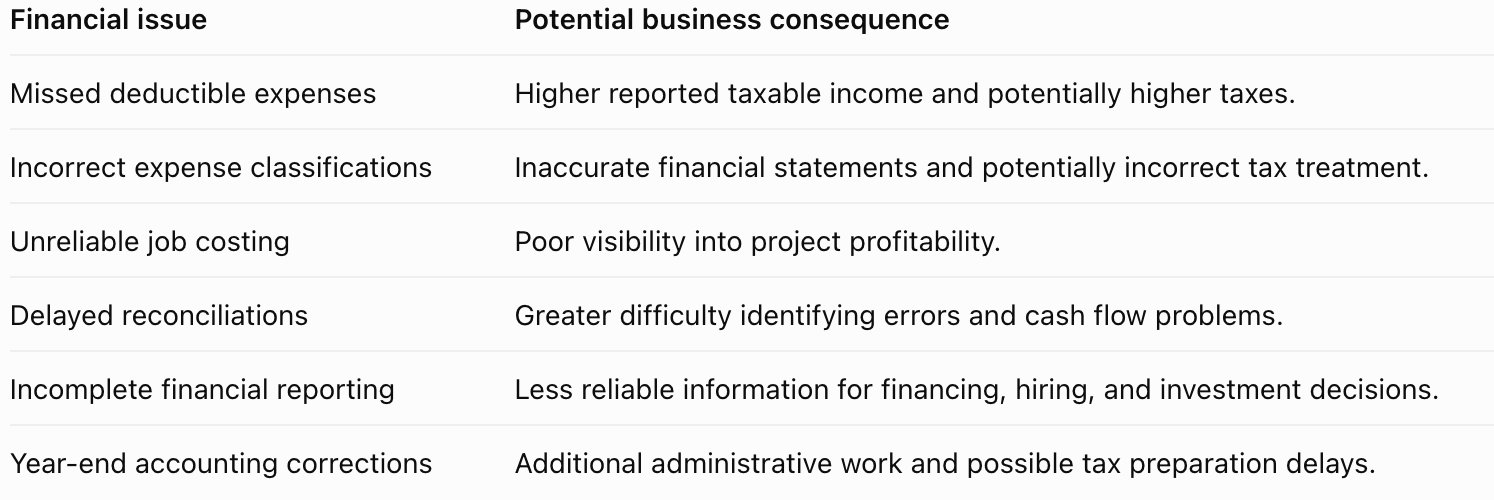
The larger concern is that you may be making decisions based on financial information you cannot fully trust.
Accurate financial records help connect tax planning with the company’s broader financial strategy.
How Can You Reduce the Risk of Lost Deductions?
The most effective approach is to make recordkeeping part of ongoing financial management, not an annual tax preparation exercise.
That means maintaining consistent bookkeeping procedures, reconciling accounts regularly, reviewing financial statements, and addressing unusual transactions before they become year-end problems.
Also, establish a process for communicating significant purchases, ownership changes, and other financial decisions to your tax advisors.
But which documents should you keep, and what should you prepare before tax season?
Frequently Asked Questions About Poor Recordkeeping and Tax Deductions
Can I lose a tax deduction if I don’t have a receipt?
Yes, a deduction may be disallowed if you cannot adequately substantiate the expense. However, a paper receipt isn’t always the only acceptable evidence. Invoices, payment records, and other supporting documents may help establish a transaction. Certain expenses, including travel and vehicle costs, have specific substantiation requirements.
Can bookkeeping errors cause a business to overpay taxes?
Yes. If deductible expenses are omitted, incorrectly classified, or overlooked during tax preparation, a business may report more taxable income than appropriate. The tax consequences depend on the transaction and applicable rules. Regular account reconciliations and financial reviews can help identify errors before you file returns.
Can I correct bookkeeping mistakes after filing a tax return?
Often, yes. Depending on the circumstances, a business may need to correct its accounting records and file an amended return or take another appropriate tax reporting action. Not every bookkeeping adjustment requires an amended return. A tax advisor can evaluate the error, applicable deadlines, and the appropriate correction.
Don’t Let Poor Records Limit Your Year-End Tax Planning
Accurate records don’t just help substantiate past expenses. They provide the information needed to evaluate future tax decisions.
For example, you may need to review equipment purchases, owner compensation, retirement contributions, estimated tax payments, and potential credits before December 31.
These decisions often depend on accurate year-to-date financial information and reliable projections.
Steel Ledger Advisors’ 2026 Business and Individual Year-End Tax Checklists identify important tax planning considerations, including deductions, credits, compensation, investments, and reporting requirements.
Are your financial records helping you make better decisions, or putting valuable deductions at risk?
Contact Steel Ledger Advisors to discuss your accounting and tax planning needs.